
The average salary in Germany pays is around €59,100 gross per year in 2026 — about €4,925 a month — according to the StepStone Gehaltsreport and Destatis, while the median sits lower, near €53,900. That gap matters: roughly two-thirds of German employees earn below the average, so the median is the realistic figure for a typical worker. And Germany’s pay story has two features that catch everyone out — 35 years after reunification the East still earns far less than the West, and your take-home depends heavily on your “tax class” (Steuerklasse). This guide explains what Germans really earn, and why two people on the same gross can pocket very different amounts.
The East-West divide: still here in 2026
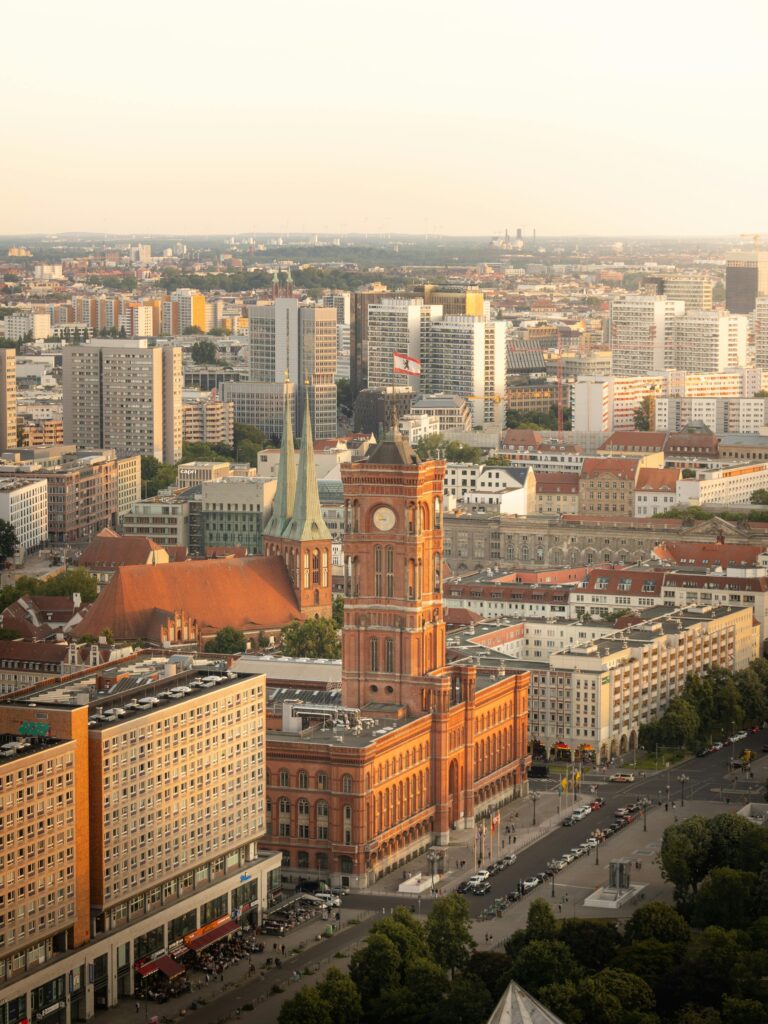
This is Germany’s most striking pay feature. Three and a half decades after reunification, a clear wage gap remains between the former East and West. In 2026, the median in western states is about €55,435, versus €46,013 in the eastern states — a gap of roughly €9,400, or about 17%. It has narrowed since the 1990s, but it persists, driven by where large industry, corporate headquarters and high-paying sectors sit. Berlin falls between the two, statistically counted with the East but paying closer to western levels. A salary that feels generous in Leipzig or Dresden can feel ordinary in Munich or Frankfurt.
Tax classes (Steuerklassen): why your net varies so much
Here’s the catch that surprises every newcomer. Germany sorts employees into six tax classes (Steuerklassen) based on marital and family status, and your class dramatically changes your take-home. A single person sits in Class I and keeps the least; a married sole earner in Class III keeps significantly more on the exact same gross. On a median €54,000 salary, a single person nets around €34,000 a year, while a married earner with a lower-earning spouse can net €4,000+ more. So when comparing German offers, your personal situation matters as much as the headline figure.
Average salary Germany after tax: what you keep
Germany has a high tax and social-security burden. Income tax, health insurance, pension, unemployment and long-term-care contributions together take roughly 35–42% of a gross salary, and there may be a small solidarity surcharge and optional church tax on top. Someone on the average €4,925 a month takes home around €2,950–3,100 net in Tax Class I, depending on their health-insurance fund and family status. There is also a national minimum wage — the Mindestlohn, €13.90 an hour in 2026 — which lifts the bottom of the market. The trade-off for those deductions is strong public healthcare, pensions and generous parental leave, so the contributions buy real security.
Average salary by German region
Pay varies widely by region. The southern states of Bavaria and Baden-Württemberg, home to the automotive and technology giants, report the highest wages — Munich averages roughly €5,800–6,400 a month and Frankfurt €5,700–6,300 — with Hamburg and Hesse close behind. The eastern states of Saxony, Thuringia and Mecklenburg-Vorpommern sit lower, often €3,800–4,400 a month, though this is partly offset by significantly cheaper housing. The table below shows average salaries by region, based on Destatis data.
| State / Region | Avg. Monthly Salary |
|---|---|
| Bavaria | €4,950 |
| Baden-Württemberg | €4,890 |
| Hesse (Frankfurt) | €4,870 |
| Hamburg | €4,820 |
| Saxony (East) | €3,780 |
Bonuses and the missing 13th month
Unlike France, Germany has no statutory 13th-month salary — but many workers get something close. Around 55% of employees receive a Christmas bonus (Weihnachtsgeld), typically worth a quarter to a full month’s pay, and some also get holiday pay (Urlaubsgeld), especially in sectors covered by collective agreements (Tarifverträge). Because these “Sonderzahlungen” are common but not guaranteed, always check whether a quoted annual salary includes or excludes them before comparing two German offers.
What salary do you need to live comfortably in Germany?
As a guide, a single person lives comfortably on a net income of €2,500–3,000 a month in most German cities. In expensive cities like Munich and Frankfurt, comfortable is closer to €3,200–3,500 net, given high rents. In smaller cities and most of eastern Germany, the lower cost of living means €2,500–3,000 net already buys a genuinely comfortable life — which is why real living standards in the East narrow the gap the headline salary suggests.
The average salary in Germany vs other countries
Germany offers some of the highest average salaries in Europe, well above Spain, Italy or Portugal, and broadly comparable to the United Kingdom. Globally, German pay sits below the United States and Australia — but universal healthcare and high job stability mean German salaries buy a security the headline figures alone don’t capture.
With an average salary near €59,100 and a median around €53,900, Germany combines high pay with a strong social system. Before judging a German offer, check the two things the number hides: whether the job is in the higher-paying West or lower-cost East, and which tax class you’ll fall into — together they decide what the salary is really worth. For official figures, see the German Federal Statistical Office (Destatis).