
The median lineman salary in the USA is $95,320. a year in 2026 — about $45.83 an hour — according to the U.S. Bureau of Labor Statistics (BLS). That makes it one of the best-paid skilled trades you can enter without a college degree. The catch? You earn it climbing utility poles and working high-voltage lines, often in the worst weather — which is exactly why the pay is so high.
Why linemen are paid so well
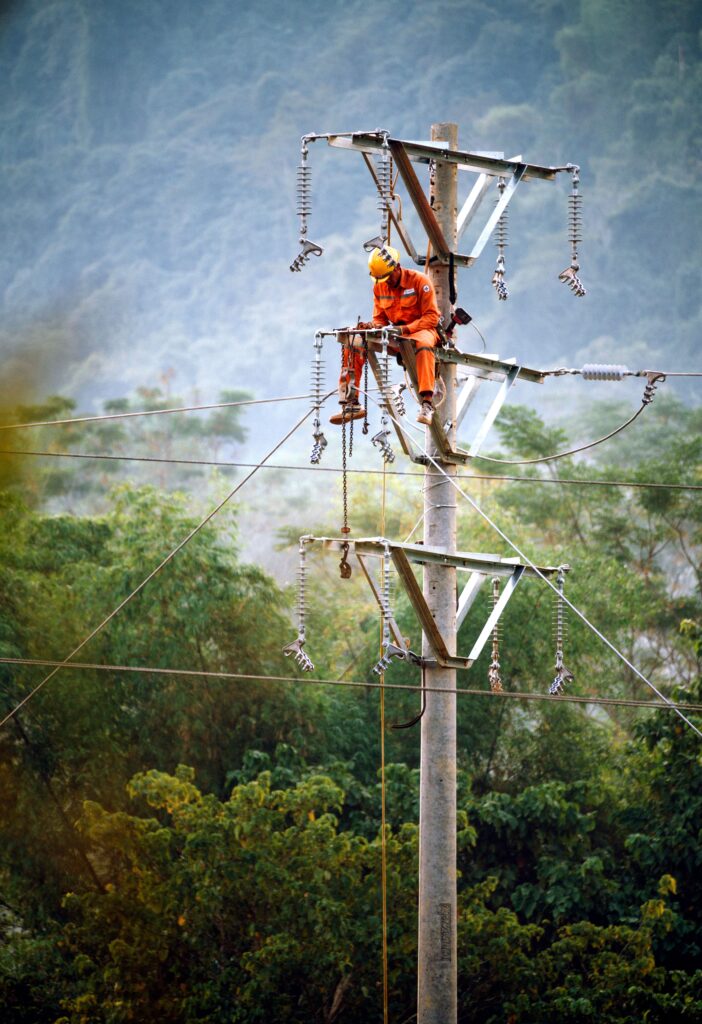
Linemen — officially electrical power-line installers and repairers — build and maintain the power grid. It’s skilled, dangerous, physically demanding work performed at height around high voltage, and that risk premium is built into the pay: injury rates are among the highest of any trade. Demand is steady (the grid never stops needing maintenance), with about 10,700 openings a year and 7% projected growth — much faster than average — as grid modernisation, renewables and EV load all add strain. For anyone asking how much do linemen make, the honest answer is “a lot, for a trade you can enter straight out of high school.”
Storm work and overtime: where the big money is
Most linemen are paid hourly, and that’s a feature, not a bug. When storms knock out power, utilities call in crews to work around the clock at overtime and double-time rates. “Storm chasers” who travel to disaster areas can earn enormous overtime — sometimes adding tens of thousands to a year’s pay. The late nights and emergency call-outs are demanding, but they’re also why a journeyman lineman hourly rate can translate into a six-figure year, well above the published median.
Lineman salary by experience
- Apprentice (0–4 yrs) — around $52,350, earning while you train through a 3–4 year apprenticeship.
- Journeyman (median) — $95,320.
- Top 10% / storm work — $128,690+.
- Foreman / general foreman — highest, overseeing crews.
Lineman Salary by State
Location is the biggest factor in the lineman salary by state. California pays the highest average ($125,270), with Oregon and Washington close behind and Hawaii posting the highest median ($134,340), while parts of the South sit lower — Mississippi averages $71,580:
| State | Average annual salary | Average hourly wage | Median annual salary |
|---|---|---|---|
| California | $125,270 | $60.23 | $129,040 |
| Oregon | $123,490 | $59.37 | $131,090 |
| Washington | $122,100 | $58.70 | $133,060 |
| Hawaii | $118,110 | $56.78 | $134,340 |
| Idaho | $113,480 | $54.56 | $125,410 |
| New Jersey | $109,390 | $52.59 | $121,580 |
| Vermont | $108,630 | $52.22 | $108,520 |
| Massachusetts | $108,040 | $51.94 | $110,210 |
| New York | $108,030 | $51.94 | $121,280 |
| Illinois | $107,820 | $51.84 | $108,120 |
| Connecticut | $107,700 | $51.78 | $126,850 |
| District of Columbia | $104,050 | $50.03 | $101,240 |
| Michigan | $103,680 | $49.85 | $106,890 |
| Rhode Island | $103,110 | $49.57 | $104,620 |
| Montana | $103,000 | $49.52 | $110,320 |
| Pennsylvania | $101,970 | $49.02 | $106,230 |
| Minnesota | $101,860 | $48.97 | $104,180 |
| New Hampshire | $100,240 | $48.19 | $102,170 |
| North Dakota | $99,510 | $47.84 | $105,870 |
| Colorado | $97,770 | $47.01 | $103,980 |
| Maryland | $97,450 | $46.85 | $106,090 |
| Nevada | $96,380 | $46.34 | $96,560 |
| Wisconsin | $96,350 | $46.32 | $105,820 |
| South Dakota | $94,900 | $45.63 | $97,310 |
| Utah | $93,200 | $44.81 | $101,220 |
| Iowa | $92,740 | $44.59 | $100,200 |
| Alaska | $92,220 | $44.34 | $92,470 |
| Kansas | $92,150 | $44.31 | $101,620 |
| Delaware | $91,660 | $44.07 | $97,180 |
| Indiana | $91,190 | $43.84 | $102,040 |
| Missouri | $89,580 | $43.07 | $96,360 |
| Wyoming | $88,790 | $42.69 | $93,860 |
| Ohio | $88,330 | $42.47 | $93,150 |
| Nebraska | $87,800 | $42.21 | $92,150 |
| Maine | $86,320 | $41.50 | $83,090 |
| West Virginia | $85,000 | $40.87 | $83,810 |
| Florida | $84,900 | $40.82 | $86,870 |
| Arizona | $83,210 | $40.00 | $75,420 |
| Arkansas | $83,100 | $39.95 | $81,450 |
| Tennessee | $82,970 | $39.89 | $83,660 |
| Alabama | $82,460 | $39.64 | $92,030 |
| Georgia | $81,890 | $39.37 | $80,080 |
| Texas | $78,670 | $37.82 | $78,940 |
| Virginia | $78,430 | $37.71 | $76,590 |
| Oklahoma | $78,360 | $37.68 | $76,010 |
| North Carolina | $77,570 | $37.29 | $77,270 |
| Louisiana | $77,570 | $37.29 | $76,410 |
| Kentucky | $75,710 | $36.40 | $77,020 |
| South Carolina | $75,390 | $36.25 | $76,870 |
| New Mexico | $74,530 | $35.83 | $76,470 |
| Mississippi | $71,580 | $34.41 | $75,890 |
Note the tax angle: states like Texas, Florida, Washington, and Nevada have no state income tax, so a lineman there keeps more of the gross than the headline figure suggests — worth weighing against the higher gross in California.
See the difference for yourself — the calculator below has the 2026 state rates built in:
US Take-Home Pay Calculator (2026)
Enter your gross salary to estimate your net pay after federal tax, state tax and FICA.
| Gross salary | $0 |
| Federal income tax | $0 |
| State income tax | $0 |
| Social Security (6.2%) | $0 |
| Medicare (1.45%) | $0 |
| Total deductions | $0 |
| Effective tax rate | 0% |
This is an estimate for informational purposes only and is not tax advice. Federal income tax and FICA use official 2026 IRS and SSA figures. Every state is calculated using its real 2026 rate schedule and its own standard deduction or personal exemption — no flat approximations. State rates and brackets are as of 1 January 2026 (source: Tax Foundation, compiled from state statutes, forms and instructions). A few states index their bracket thresholds annually and had not published 2026 figures at compilation, so those reflect the most recent official schedule. Not included: city and county income taxes, state tax credits, itemised deductions, dependant exemptions, and state disability or paid-leave payroll levies (notably California's 1.1% and Washington's 0.58%). For an exact figure, consult the IRS, your state tax authority or a tax professional.
What else affects a lineman’s pay
- Union vs non-union — union linemen (IBEW) typically earn more, with strong pensions and benefits.
- Overtime and storm work — the single biggest swing factor in real take-home.
- Specialty — transmission and substation work pays more than distribution.
- State and cost of living — as the table shows.
Is becoming a lineman worth it?
For one of the highest ceilings of any no-degree trade, it’s hard to beat. Most enter through a short line school (a few months) followed by a paid 3–4 year apprenticeship, plus a CDL — you earn while you train, reach a median above $92,000, and can push well past six figures with overtime and storm work, all without student debt. The trade-offs are real, though: it’s genuinely dangerous, physically punishing, and the emergency call-outs mean unpredictable hours. For those who can handle the risk, the pay is among the best in the trades.
Frequently asked questions
How much do linemen make an hour in the USA?
The median is about $45.83 an hour in 2026, from roughly $23/hour for apprentices to $57+/hour for experienced journeymen, before overtime and storm pay.
Do linemen really earn six figures?
Yes — the median is $95,320, and with overtime and storm work many experienced linemen clear $120,000+ a year. Top earners and foremen go higher.
Do you need a degree to become a lineman?
No. You need a high school diploma, a 3–4 year paid apprenticeship, and a CDL — no college degree, which is why it’s one of the best-paid debt-free career paths.
A lineman’s $95,320 median is almost twice the figure for all American jobs; see how it compares in our guide to the average salary in the USA. The BLS covers apprenticeships, safety training and the job outlook in its Occupational Outlook Handbook entry for line installers and repairers.
Related US trades: compare what an electrician, an HVAC technician, and a welder earns by state.