The average salary Japan reports is around ¥4.78 million gross per year in 2026 — roughly ¥398,000 a month, or about US$30,250 — according to the National Tax Agency, the highest figure since records began in 1949. But headline numbers are especially misleading in Japan, because of two features Western workers rarely encounter: large twice-yearly bonuses, and a pay system that rewards age and tenure as much as performance. To understand what people really earn here, you have to think in annual terms — in nenshu, not monthly base pay.
The bonus system (shōyo): why you must think annually
This is the single most important thing to understand about Japanese pay. Most full-time employees receive two large bonuses a year — a summer bonus (around June or July) and a winter bonus (around December) — known together as shōyo. Combined, they typically add the equivalent of two to four months of base salary, boosting annual gross income by roughly 16–33% over a simple twelve-month calculation.
This is why the Japanese always quote nenshu (annual income with bonuses included) rather than monthly pay. When comparing a Japanese job offer with one abroad, always ask for the nenshu figure — the monthly base alone hides a big chunk of the package. Bonuses are also technically discretionary and tied to company performance, so a bad year can shrink them; check whether an offer specifies a guaranteed minimum.
Seniority pay (nenkō): age over performance
Traditional Japanese companies still pay heavily on the nenkō system — wages that rise automatically with age and years of service. A worker in their fifties can earn far more than a younger colleague doing similar work, simply through tenure. Earnings climb steadily through a career and peak in the late forties and fifties, much later than in many Western countries.
The model is eroding as firms adopt performance-based pay, and foreign companies are accelerating the shift: international tech firms routinely offer ¥8–12 million for mid-career engineers in Tokyo, forcing domestic employers to narrow their traditional discount or lose talent. For a young, skilled worker, that gap between a Japanese firm and a foreign one is often the biggest single decision in your earnings.
Average salary Japan: mean vs median
The ¥4.78 million average is pulled upward by senior earners and the seniority system, and it includes part-time and non-regular workers. The median sits lower, around ¥3.8 million, while full-time regular employees average closer to ¥5.0–5.4 million. Which figure applies to you depends heavily on employment type — Japan’s split between seiki (regular) and hiseiki (non-regular) workers is one of the sharpest pay divides in the developed world.
Wages are finally moving after 30 flat years
Japan’s incomes were famously stagnant in real terms for three decades — but that has changed, and 2026 confirmed it. The Shuntō spring wage negotiations, in which unions bargain collectively each year, delivered a final result of +5.01% in 2026 (announced July 2026), the third consecutive year above 5% and the strongest run since the early 1990s bubble era. In cash terms that’s about ¥16,400 more per month.
Just as importantly, real wages turned positive in January 2026 for the first time in 13 months, meaning pay rises finally outpaced inflation. Prefectural minimum wages have also crossed the symbolic ¥1,000-an-hour mark nationally, with a weighted average near ¥1,064 and Tokyo at ¥1,226; the government is targeting ¥1,500 by 2030. The caveat: gains are uneven — large corporations are delivering, while small and medium firms, which employ most Japanese workers, show signs of wage-hike fatigue.
Average salary by industry
Industry creates huge gaps in Japanese pay — the top sector pays nearly three times the bottom one. Electricity, gas and water supply leads at around ¥8.32 million, followed by finance and insurance (¥7.02 million) and information and communications (¥6.60 million). At the other end, accommodation and food services averages just ¥2.79 million. The table below shows average annual salaries by sector, based on National Tax Agency data.
| Industry | Avg. Annual Salary |
|---|---|
| Electricity, gas & water | ¥8.32M |
| Finance & insurance | ¥7.02M |
| Information & communications | ¥6.60M |
| Japan (national average) | ¥4.78M |
| Accommodation & food services | ¥2.79M |
The “income wall”: Japan’s strangest pay incentive
Here is a feature of the Japanese system that exists almost nowhere else. For decades, part-time workers — overwhelmingly spouses in single-income households — deliberately capped their own earnings to stay below the ¥1.03 million threshold at which income tax kicked in and dependent status was lost. Millions of people worked fewer hours on purpose, creating a labour shortage that made no economic sense.
Japan’s 2026 tax reform finally raised that threshold, lifting the basic deduction and pushing the minimum taxable income line to ¥1.78 million. The practical effect is that part-time workers can now earn substantially more before hitting the cliff — a change expected to pull hours back into a tight labour market. If you’re working part-time in Japan, this single reform may be worth more to you than any pay rise.
Tokyo vs the rest of Japan
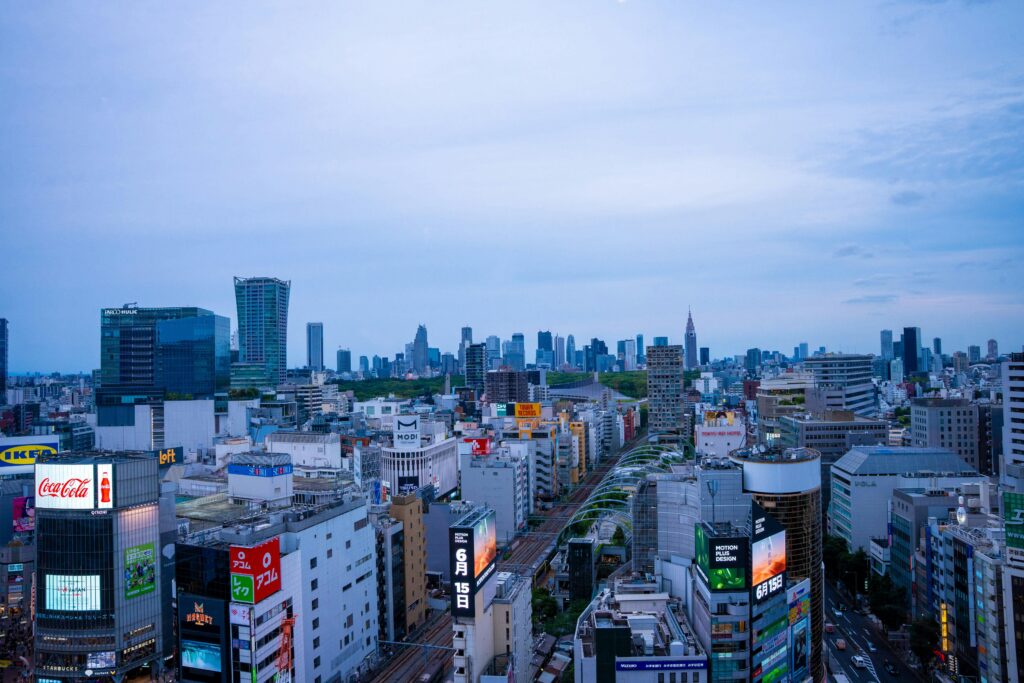
Tokyo workers earn the highest salaries in the country, with average annual income running roughly ¥6.2–6.9 million — well above the national figure, and manager-level roles reaching ¥10–11.5 million. But the premium is largely offset by cost of living: rent for a one-bedroom in central wards commonly runs ¥180,000–300,000 a month, and landlords apply a strict screening rule that annual income should be at least 36 times the monthly rent. For a ¥150,000 apartment, that means proving ¥5.4 million a year before you can even sign. Analysts estimate a ¥5 million salary in a rural prefecture buys what ¥6.2–6.5 million buys in Tokyo — so the capital’s advantage is far smaller than it looks.
Gross vs net: what you actually take home
After income tax, resident tax and social insurance, take-home pay in Japan is typically 70–75% of gross. On the average ¥398,000 monthly salary, that leaves roughly ¥290,000 in hand. Social insurance — health, pension and employment — is a significant deduction, but it funds universal healthcare and a state pension, so the effective value is higher than the raw percentage suggests. Note that resident tax is billed a year in arrears, which catches out newcomers: your second year in Japan is more expensive than your first, even on the same salary.
Average salary Japan vs other countries
In nominal and US-dollar terms, Japanese salaries sit well below the United States and Switzerland, and closer to southern European economies like Italy — a consequence of decades of wage stagnation and a weak yen that flatters foreign comparisons. What the raw figures miss is Japan’s low income inequality, universal healthcare, exceptional public safety, and the cushion of those twice-yearly bonuses, which together make the lived reality more comfortable than the dollar figure implies.
With an average around ¥4.78 million but a median nearer ¥3.8 million, Japan rewards experience and tenure more than youth or raw performance — though that is finally starting to shift. Before judging any Japanese salary, convert it to nenshu, add the bonuses, and weigh it against Tokyo’s rents. That is the only way to see what an offer is really worth. For official figures, see Japan’s National Tax Agency.